
Redford City Directory Holdings
Digging into a Redford city directory works best once you know what these books can and cannot prove. Old entries turn up in surname listings, street sections, school annuals, and newspaper notices alike. The directory shines when a name and a house number must be tied to one period. Start with the family's spelling. Then compare nearby years before trusting any single entry. Remember that directories are clues, not a census of every person at an address. Census, cemetery, map, and newspaper evidence can confirm a move, a death, a shifted boundary, or a similar name.
| Collection | Years | Where Held | Access |
|---|---|---|---|
| Polk Redford, Brightmoor, and Rosedale Park | 1925 | RTDL archive; Library of Michigan; Google Books catalog lead | Digitized archive or catalog, then confirm the volume |
| Bresser West Wayne criss-cross directories | 1961-77; 1979-96 | Henry Ford Centennial Library / Dearborn Genealogical Society | Collection access by volume |
| Redford business and phone books | 1949; 1965-present | Historical Commission and Chamber listings | Local collection, verify each year |
| Wayne County directories | 1972-91 | Library of Michigan | Shelves and microfilm room |
No authoritative catalog pins down the first or last Redford-specific printed volume. Treat a missing year as a gap in the run, never as proof that a household left town.
Redford Directory Material at RTDL
The Redford Township District Library Local History Archives gathers the 1925 Polk directory, Redford Observer issues from 1955-2017, several Township News titles, and school yearbooks. It also holds township clerk-filed death records from August 1897 through April 1952 and other local documents. Its digitized collections are searchable worldwide. Licensed resources carry their own access rules. The reference desk can explain what is online versus physical. The local-history room sits at 25320 Six Mile Road. Public hours run Monday through Thursday 10-8:30 and Friday and Saturday 10-5, with Sunday closed. Call 313-531-5960 before visiting. Ask about reproductions and whether the item you need is already digitized. The library's local-history archive listing names the digitized layers that can sit beside any directory entry.
That archive list earns its keep because a surname can be tested against period news, school material, and death records rather than treated as a current address result.
Redford City Directory: Polk in 1925
The Google Books catalog record for Redford City Directories covers the 1925 Polk & Co. title. It identifies that specific volume. Its catalog and OCR lead support names, addresses, occupations, and business context. The catalog alone does not show every field in every entry. So a feature common to Polk formats is no guarantee for Redford specifically. Identify the volume through the catalog first. Then read the actual page before quoting an abbreviation, spouse reference, or mark. Polk formats can include household members, a street section, and ownership or renter indicators. The 1925 volume also carries classified businesses and rural routes. These can place a family in its wider setting. The cataloged 1925 Redford directory is a title-level lead. It is not a substitute for examining the entry itself.
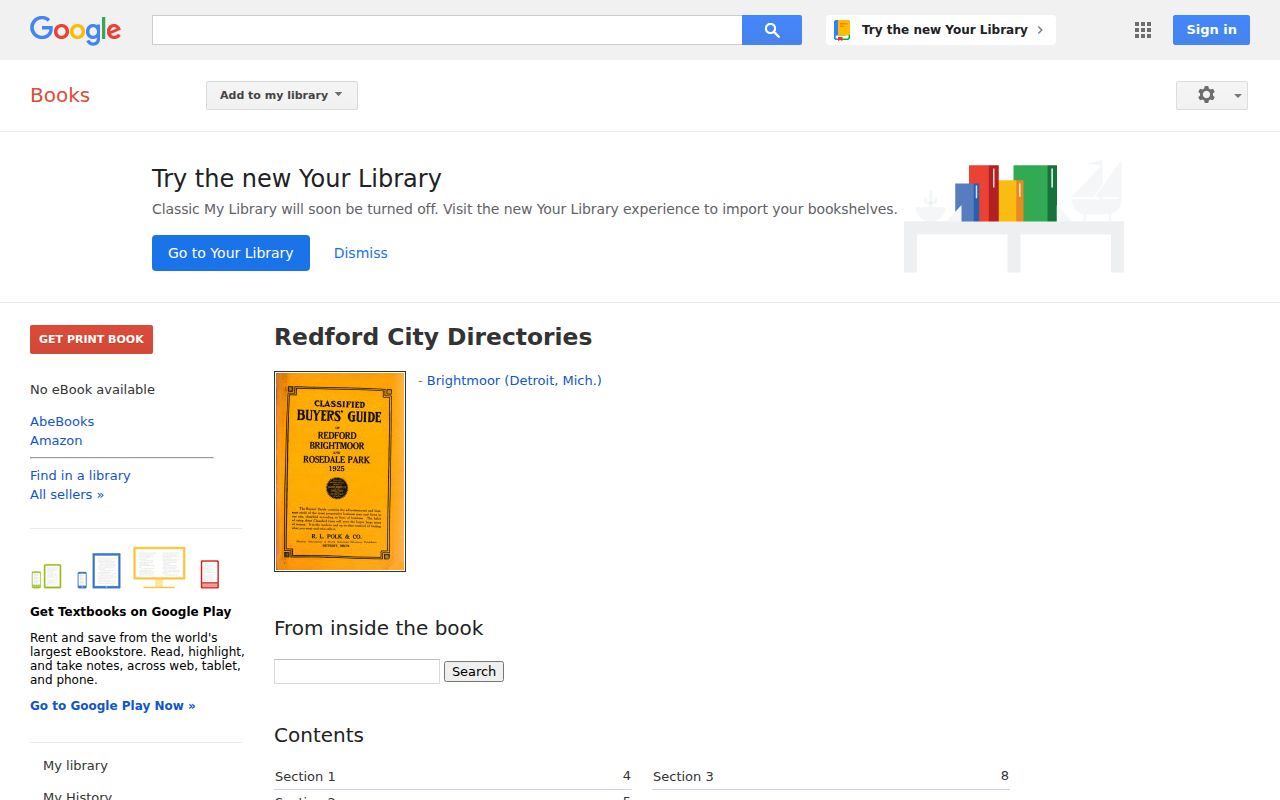
Once the right volume is in hand, copy the printed name, initials, address, and page citation exactly, so any later reader can repeat the check.
Reading Redford Directory Entries
Directory entries are terse, and their meaning depends on the book in front of you. Polk surname sections may carry a name and address. They may also list an occupation, household details, and an ownership or renter marker. Bresser volumes take the opposite approach. They arrange entries by street and house number. Then they add a head of household, phone number, owner or renter status, year first listed, and new-arrival or relocation clues. Always read the volume's introductory key before decoding a short form.
| Name and initials | Record the spelling exactly. Initials and a spouse reference can separate similar names, but need corroboration. |
|---|---|
| Occupation or business clue | Useful for distinguishing people with the same name; it is not proof of identity by itself. |
| Street address | Keep the house number, street spelling, cross street, and phone number when printed. |
| Owner or renter mark | Read only through that volume's key. Marks vary, and they do not list every person at an address. |
| Street-section match | Compare the surname finding with the street-order entry to control for same-name errors. |
Three terms are especially useful when working through the books:
- Criss-cross directory
- A reverse directory arranged by street and house number, often showing a household head and phone information.
- Householder index
- The name-ordered part of a volume used to locate a person or household before checking the street section.
- Abbreviation key
- The book's own list of shortened terms and marks. Photograph or transcribe it before reading a notation.
Redford's Bresser Street Layer
Bresser West Wayne directories span 1961-77 and 1979-96 in the collections identified by the Dearborn Genealogical Society. They are regional volumes. No Redford address is promised for every year. Their street-order arrangement pays off when the house number is known but the surname is not. Phone-number and building sections offer other ways into the same material. Start with the street section. Copy the head of household, any phone, and the first-listed clue. Then hunt the name section. A changed phone, a new-arrival notation, or an ownership shift may signal a move, though no volume records every occupant. For a present-day trail, the Redford street directory can take over once the historical volume has narrowed the question.
Redford City Directory Cross-Checks
Redford's archive layers shine when reconnecting with a former classmate, tracing an heir, or testing an old family story without assuming anyone still lives there. The Historical Commission holds Redford High School yearbooks for 1923-2007, Redford Union volumes for 1946-2001 with stated gaps, and Thurston books for 1957-86 with gaps. Yearbooks supply names, grades, clubs, and portraits. The directory supplies the address-era lead. For an event, obituary, civic notice, or business mention, the digitized Redford Observer archive is a strong next check. Historical Commission collections add funeral-home ledgers, cemetery material, death registers, family binders, maps, property abstracts, and house field sheets. A burial record proves burial, not residence, so pair it with dated news or directory evidence. The searchable Redford Observer archive can help test a date window around a listing.
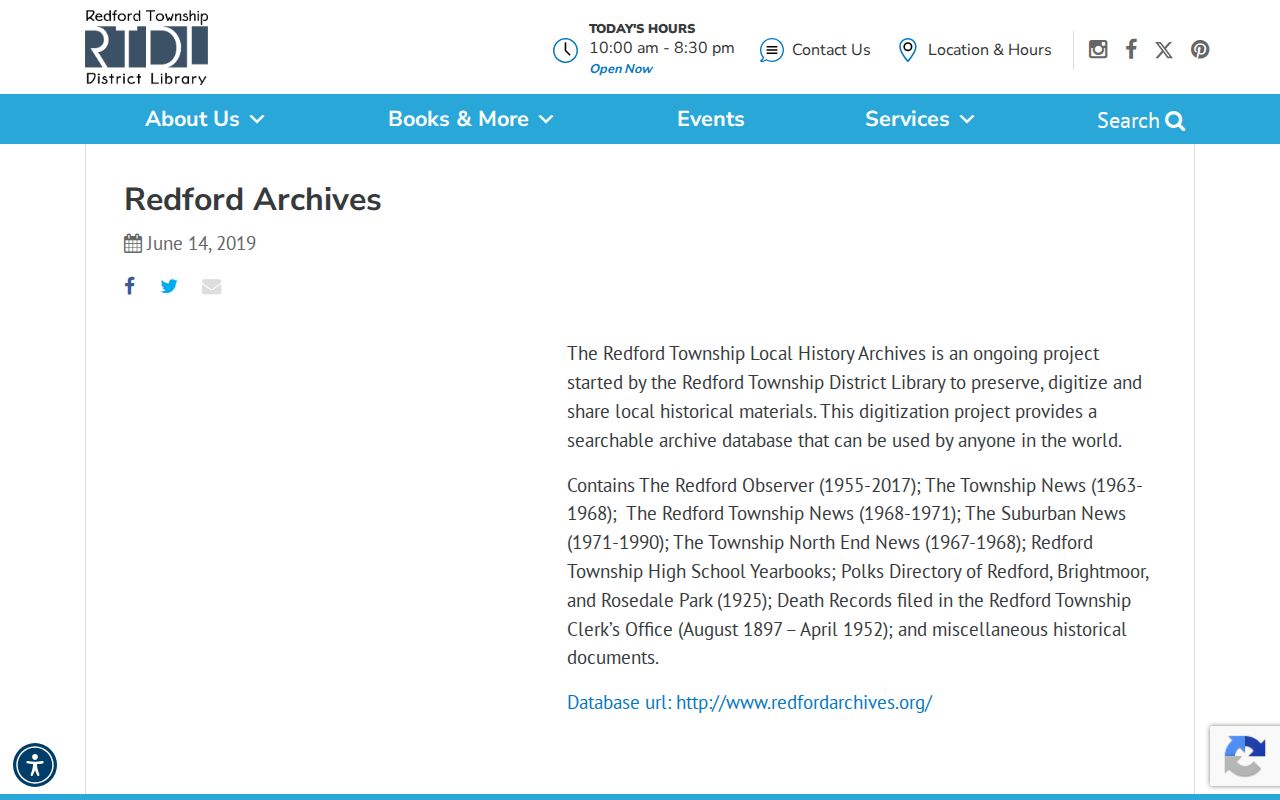
Run the same lookup several ways before concluding anything. Try exact spellings, street names, locality variants, and a tight date window, and note the newspaper title and issue date beside every hit.
Trace a Redford Directory Household
Give each source one narrow job. That keeps a household trail honest. Census schedules open to the public under the federal 72-year rule. Geography is the trap here. The township once reached Greenfield Road, and Detroit's 1920s annexations redrew old boundaries. Match a census entry to the map year and the legal locality of its day rather than trusting the modern township label.
- Start with a stable address from a directory, deed, assessor record, or historical map. Preserve its exact spelling and locality label.
- Check the surname and street sections in the same volume. Record initials, a spouse clue, phone number, and owner or renter mark if the book provides them.
- Search two or three available volumes before and after that year. A blank year can reflect an unheld volume, a move, or an omission.
- Pair the dated entry with the nearest released census, recorded deed, local notice, obituary, yearbook, or map.
- Use the legal description or deed parties when two people share a name. Occupation and address alone do not resolve identity.
A vanishing name rarely has one cause. It could be a move, a death, a change in listing practice, or a missing volume. Redford Cemetery's burial-name search, paired with an obituary and the local death registers, can separate those possibilities when dates align.
Redford's Missing Directory Volumes
The gaps themselves are the record. The Historical Commission catalogs Redford Township News from 1946 through 1990. Yet full microfilm survives only for 1964-66, 1968-72, and 1974-90, with partial or missing stretches elsewhere. Redford Record ran from 1910 to 1985. It shows its own mix of full, partial, and absent periods. Some missing Record years may sit at the Bentley Historical Library in Ann Arbor.
The commission's collection sits at 12895 Berwyn. It is open the first and third Saturdays from noon to 3 or by appointment. The commission also holds local maps from 1816 to roughly 1980, a 1921 Old Redford Sanborn lead, and property research material. When a digitized directory run stops short, the township Historical Commission is the natural counter to try next.
The milestones below frame the directory trail. They help focus a collection request, without pretending every volume in between survived or was cataloged.
- 1925: Polk & Co. published the verified Redford, Brightmoor, and Rosedale Park directory lead.
- 1949: a Redford business or phone book is listed in Historical Commission holdings.
- 1961-77 and 1979-96: Bresser West Wayne criss-cross volumes supply a regional reverse-directory layer.
- 1972-91: Library of Michigan material lists Wayne County directories for a broader surname and street check.
Redford Records and Locality Names
Old geography often explains a missed name. Redford's name comes from fording the River Rouge. Historic material may cite Redford, Old Redford, Brightmoor, Detroit, or Rouge as the locality clue. Detroit annexed eastern township sections in the 1920s. County material places the end of annexation in 1926. So read each directory or newspaper address within its own date. Forcing it onto a modern boundary invites error. The Historical Commission's maps, plats, and house field sheets are useful. They can tie an old street reference to a parcel or subdivision. For a former household, favor a chain of dated sources that agree. One appealing entry alone proves little.