
Redford Resident Lookup Records
A careful name check uses the record that matches the question. The assessor record connects an owner or taxpayer to a parcel. A voter result can confirm limited registration information for a person who is found through the state tool. A court index puts a name into a case at a given time. Vital records document life events, while deeds connect named parties to an instrument and legal property description. None of those records alone proves every current occupant at an address.
| Record | What It Confirms | Where | Access |
|---|---|---|---|
| Assessment record | Owner or taxpayer, parcel, situs and mailing link | Redford BS&A | Public portal with fee/disclaimer; assessor office or FOIA fallback |
| Voter information | Returned public registration, address and status details | Michigan.gov/Vote | Name, birth month and birth year; protected fields closed |
| Court index | Party, case, court, date, type and disposition | MiCOURT | Public categories online; court inspection for a file |
| Vital record | Event, date, place or relationship | MDHHS Vital Records | Eligibility and order rules vary by record type |
| Recorded instrument | Grantor, grantee and legal-property connection | Wayne County Land Records | Free name index; paid images; older counter or mail route |
Begin with a parcel when an address is known. Begin with the person-first voter or court search when the name and an identifying detail are known. Save the source and date, because an owner, court participant, and voter each describe a different role.
Anchor a Redford Resident Lookup
Redford BS&A accepts owner name, street address, and parcel-number paths across assessing, tax, building, and utility records. For a one-person check, the assessing result is usually the useful starting point. Copy the owner or taxpayer name, physical situs address, mailing address, parcel or account number, tax year, transfer indicator, and exemption information exactly as displayed. The township notes that the data is updated daily and is not guaranteed accurate.
The situs address is the parcel’s physical location. A mailing address is where tax communication goes. They can differ. A Principal Residence exemption is a claimed status, not proof of every person who lives there. That distinction keeps the search from turning an ownership record into an unsupported household claim.
Useful fields to preserve before moving to a second source include:
- Owner or taxpayer name and the spelling used by the roll.
- Physical situs address and separate mailing address.
- Parcel or account number, tax year, and transfer indicator.
- Property class, values, exemption percentage, and listed characteristics.
The portal’s separate tabs matter: a tax or utility result is not automatically an ownership result.
Confirming Redford Voter Results
Michigan’s public voter-information tool is a confirmation route, not an address sweep or a list of a whole household. The official entry point requires a first name, last name, birth month, and birth year. A returned result may show the public name, residential address, registration status, and election or precinct information. It cannot be read as proof that every person at the address is registered or currently present.
| Field | How the public lookup uses it |
|---|---|
| First Name and Last Name | Person-identifying name fields for the query. |
| Birth Month | Required month selector in the official public lookup. |
| Birth Year | Required four-digit year field in the official public lookup. |
| Terms/privacy notice | Requires agreement before a search continues. |
Michigan Election Law, MCL 168.516, makes registration records available for inspection, but full birth date, driver-license or state-ID information, Social Security number, phone, email, and protected-address details are not ordinary public fields. A full-file request procedure, fee, and format were not verified in the research, so ask the Secretary of State or Redford Clerk about permissible fields rather than assuming a bulk extract exists.
Michigan.gov/Vote provides the state entry for this person-first check.
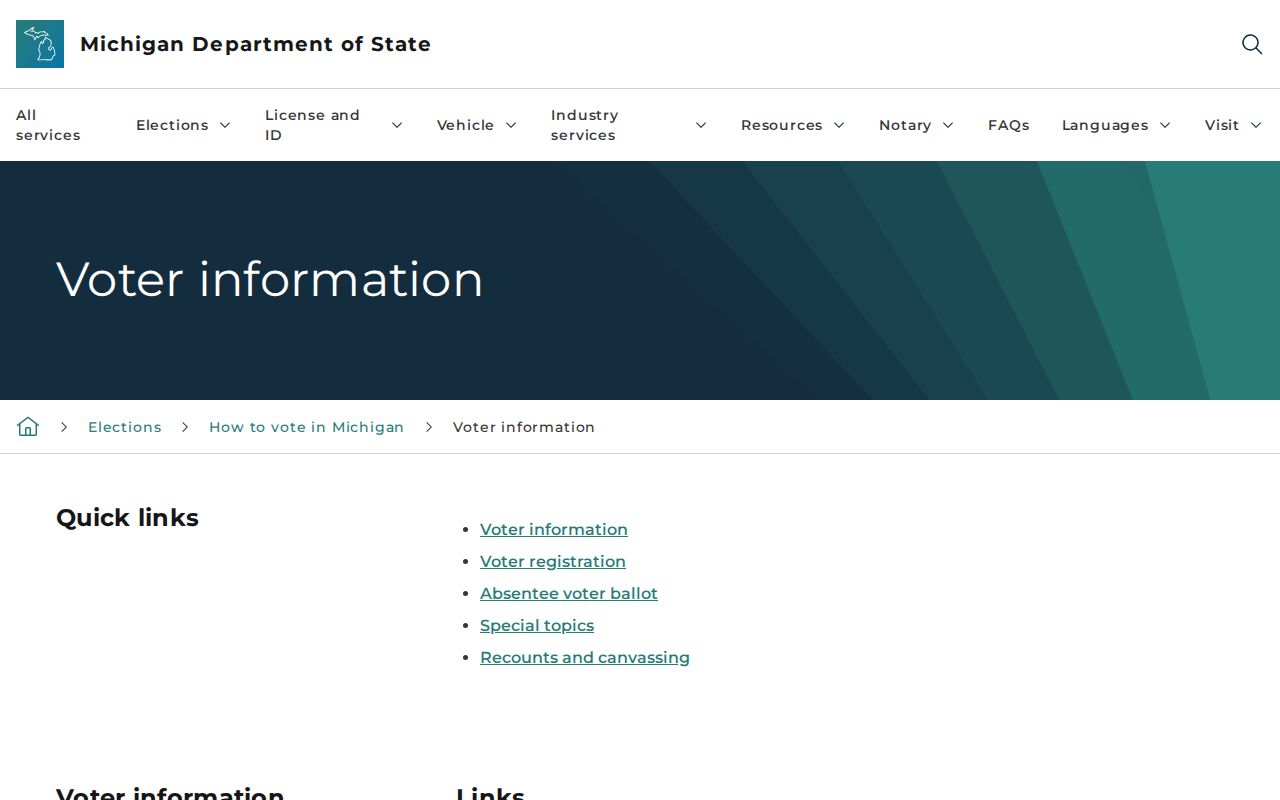
A matching voter result is one dated signal. Pair it with a parcel, deed, or other independent record before treating it as an identity match.
Note: A no-result or masked address can reflect protected information, not a move or an error.
Searching Redford Court Names
MiCOURT Case Search is the primary public name index for participating Michigan courts, including Redford’s 17th District matters when available. Choose the court and enter a last name or business name. First name, middle name, and birth year can narrow a similar-name result. For Wayne County circuit and family matters, use the separate Third Circuit Odyssey search. The two systems cover different courts.
| MiCOURT field | Search use |
|---|---|
| Court selector | Required or conditional choice that controls the participating-court scope. |
| Last Name or Business | Required name-mode field; first and middle name are optional refinements. |
| Birth Year | Optional year-only field in the public name search. |
| Case-number year, number, and type | Conditional fields for the case-number search mode. |
| Filter, Show, or Clear | Controls used to narrow or reset a result list. |
A public MiCOURT result can include the case number, court and category, participant names, charges or hearings where public, case status, and a disposition or closed date. Some tracking and incident fields can be blank.
Online results do not include the entire file. Adoption, juvenile, sealed, expunged, PPO, mental-health, and other protected categories are excluded or suppressed. Redford’s 17th District Court accepts an inspection or copy request with party names or a case number; public inspection is subject to court rules, copies are listed at $1 per page, and a certified conviction copy has a $10 processing charge. The court’s 24-hour vestibule kiosk and counter process are useful alternatives when the public search stops short.
MiCOURT’s name and case-number search is pictured here. The portal prohibits bulk downloads and automated scraping.
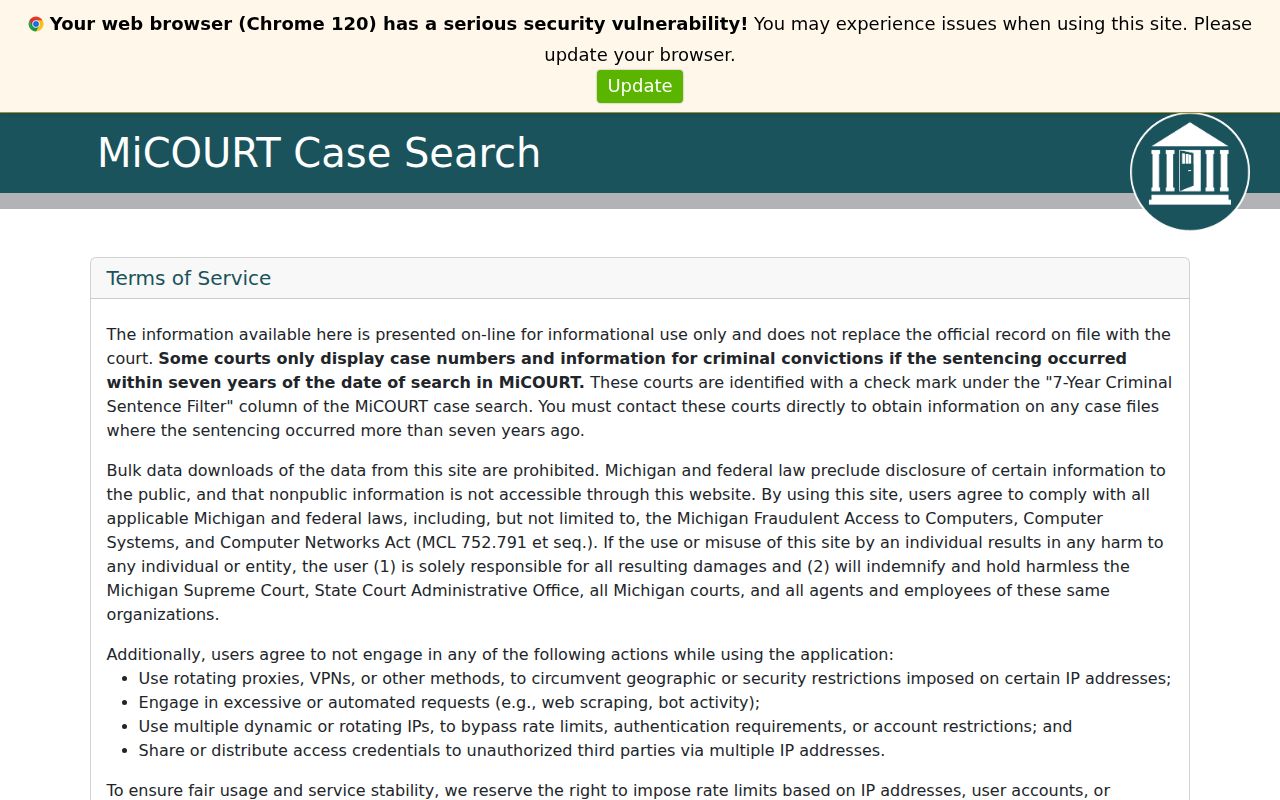
A docket confirms a public case connection at a point in time, not present residence, household membership, or the meaning of an allegation.
Redford Resident Lookup Event Trails
Vital records can corroborate an event without turning into a current-address source. Michigan registration begins in 1867 for births, deaths, and marriages, and in 1897 for divorce. Birth records younger than 100 years are restricted by MCL 333.2882 to eligible people and authorized routes. Death, marriage, and divorce copies are generally available to an applicant who completes the order and payment process, subject to stated exceptions. A divorce certificate is distinct from the related court file.
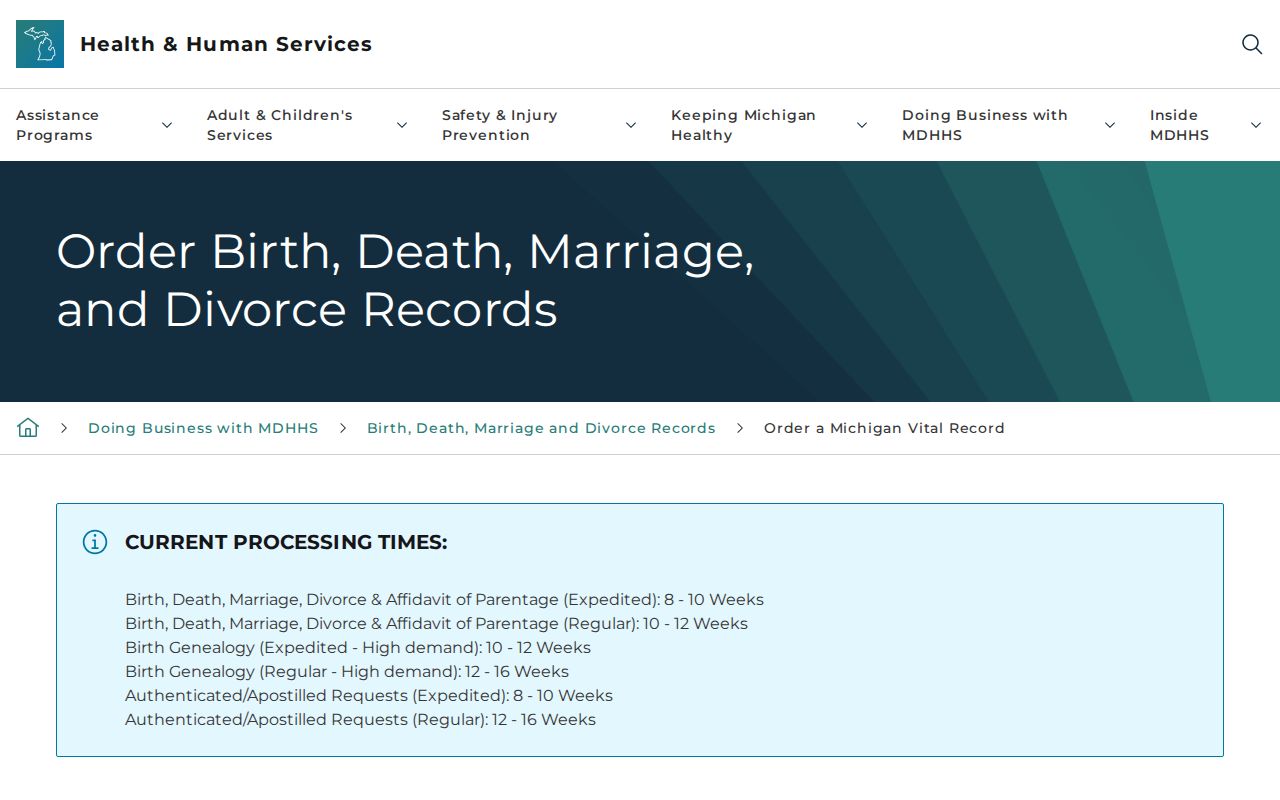
MDHHS offers online, mail, phone, drop-box, and in-person order channels. The standard listed fee is $34, with an additional $14 online processing charge; search fees are nonrefundable. Death certificates, marriage records, and local historical notices can help confirm a name, date, relationship, or former address. They do not establish a present home.
MDHHS’s vital-record order page shows the state route for certified copies.
For historical context, the Redford Township District Library identifies clerk-filed death records from August 1897 through April 1952, while the Historical Commission holds funeral ledgers and cemetery material. Those collections are better evidence for a dated family or former-classmate trail than a claim about present occupancy.
Redford Resident Lookup Fallbacks
When an online search ends, use the keeper of the record. Courts are not subject to FOIA for court files, so use the court inspection process. For a public but older Wayne County civil or divorce file, give the Clerk Records Division the party names, court, case number if known, and approximate year; older material may be retrieved from Archives. The Register of Deeds supplies older instrument help through its counter or mail route when online coverage is unclear.
For a nonexempt township administrative record, Michigan Freedom of Information Act, 1976 PA 442, MCL 15.231 et seq., is the written-request path. A request normally receives a response within five business days, with a written extension of up to ten business days. It does not open confidential vital records, protected voter data, DMV material, sealed court files, or Address Confidentiality Program information. Ask for a specific address, date range, record type, and delivery preference.
Redford Township District Library and the Historical Commission provide the local historical fallback for newspapers, yearbooks, directories, maps, death registers, and property research. Those sources can validate a dated connection when a modern public index has no useful result.
Verify a Redford Resident
Use two independent anchors before treating a person match as reliable. Start with the most exact fact already available, then test the same name across sources that describe different roles. Names may include initials, suffixes, former names, spouse notation, or simple misspellings. Redford’s proximity to Detroit also makes a shared ZIP label a weak geographic match; confirm the physical jurisdiction before selecting a court or township record.
- Normalize the name: record middle initial, suffix, former name, and spelling variants.
- Anchor the person to a parcel or returned voter result, keeping situs and mailing addresses separate.
- Search the public court index with the right court, name variation, and case year.
- Confirm a dated life event, recorded instrument, directory entry, or other independent source.
- Request a certified copy or file inspection only from the custodian when formal proof is needed.
- Docket
- A court’s running case record, showing public events, filings, or outcomes rather than a full identity profile.
- Index and image
- An index points to a record. An image is the underlying document and may require a fee, account, or counter request.
- Certified copy
- A copy issued by the record custodian with its certification, used when an ordinary web result is not enough.
The historical route differs by purpose. An heir trail may pair probate, a death record or obituary, and a deed. A former-classmate trail can use dated yearbooks and local newspapers, with the known gaps preserved. Michigan’s restricted birth and adoption records require an authorized state or court process, not a same-surname guess.
Redford Resident Lookup Filings
State filing databases offer narrow corroboration. The MiBusiness Registry permits free public searches by entity name or file number and may identify an entity, registered agent, and registered office. It launched on June 23, 2025, so older instructions may not match the current process. A registered office is a filing address, not a claim about where a person works or lives.
MiPLUS provides free professional-license verification with licensee, status, issue or expiration, and discipline fields. Certified verification is listed at $15 per license. Use either source only when the exact name and dates fit the same person; a no-result can reflect a different name or field, not a conclusion about identity.
Note: Keep business, license, parcel, and court roles separate because each record describes a different relationship.
Redford Resident Lookup Limits
Michigan makes some public records available while protecting sensitive identifiers and vulnerable residents. The Address Confidentiality Program gives eligible participants a substitute address and mail forwarding under 2020 PA 301, MCL 780.851 et seq. A masked result, substitute address, or missing field is not a reason to infer a person’s actual location. SSNs, DMV information, full voter birth data, unlisted contact details, sealed court material, and restricted vital records remain outside a normal search.
Compiled commercial reports can be stale, duplicate similar names, or join relatives and addresses incorrectly. Verify a public result with the office that holds the record. If a record appears wrong, ask that custodian about its correction process rather than substituting a similar person.
Lawful use. Use these records for personal research, family history, reconnecting, estate questions, civic curiosity, or a safety concern. Public information never permits stalking, harassment, intimidation, or repeated unwanted contact.